Showing posts with label museums. Show all posts

Thursday, April 26, 2012

The Latest State Department Cultural Objects Determinations

Given the discussion about the law known as Immunity from Seizure Under Judicial Process of Cultural Objects Imported for Temporary Exhibition or Display and the current bill on Capitol Hill to clarify that law, it is worth noting the kinds of items from abroad that receive immunity consideration from the U.S. Department of State.

The Federal Register published the latest cultural objects determinations yesterday.  The notice issued covers items destined for New York's Museum of Modern Arts's forthcoming exhibit titled "Quay Brothers: On Deciphering the Pharmacist's Prescription for Lip-Reading Puppets."  MoMa's web site explains that "[f]or over 30 years, they have been in the avant-garde of stop-motion puppet animation and live-action movie-making in the Eastern European tradition ... and have championed a design aesthetic influenced by the graphic surrealism of Polish poster artists of the 1950s and 1960s."

The determinations made by the State Department under the federal immunity law are that the imported objects are of (1) of cultural significance, (2) intended for temporary, nonprofit exhibition, and (3) in the national interest.

CONTACT: www.culturalheritagelawyer.com

Thursday, March 29, 2012

Rubin v. Iran Cases Move Forward in First Circuit and U.S. Supreme Court

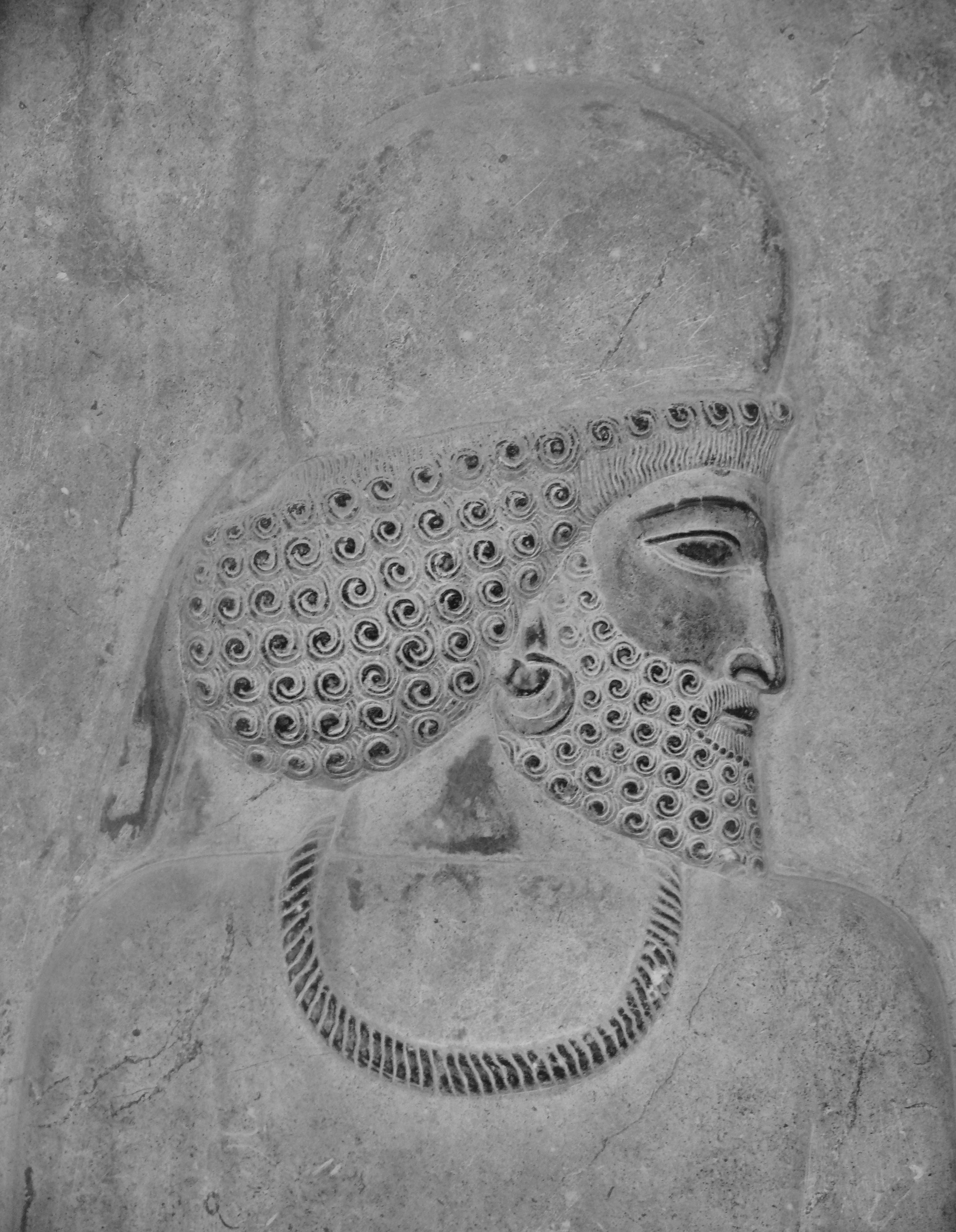
Photo credit: Alborzagros.  CC.

Jenny Rubin and others hurt by a 1997 terrorist attack in Israel filed a 92 page brief yesterday in the First Circuit Court of Appeals.  Rubin et al. v. Islamic Republic of Iran v. Museum of Fine Arts and Harvard University et al. is a case where the appellants seek to enforce a judgment awarded to them under the Terrorism Risk Insurance Act of 2002 (TRIA) by acquiring cultural artifacts claimed to be owned by Iran.  The objects sought are located in Boston and Cambridge, Massachusetts.  Meanwhile, Rubin et al. have also filed an appeal of their Seventh Circuit court case with the U.S. Supreme Court.  That case involves an attempt to attach objects located at museums in Chicago.

Hamas carried out multiple suicide bombings on September 4, 1997.  The Rubin plaintiffs sued under the Foreign Sovereign Immunities Act (FSIA) in the United States District Court for the District of Columbia against Iran, and the court found that Iran supported Hamas’ terrorist efforts.  It ruled in the plaintiffs’ favor and awarded money damages.

To collect the judgment against Iran, Rubin et al. sought to attach Iranian assets located in the United States.  They attempted to attach artifacts held at the Boston Museum of Fine Arts (MFA), Harvard’s several museums, the Oriental Institute at the University of Chicago, and the Chicago Field Museum.  The museums in the Boston and Cambridge objected, fighting the case in federal district court in Massachusetts.  The Chicago based institutions battled the case in the federal court in the northern district of Illinois, and later the Seventh Circuit Court of Appeals.

The Seventh Circuit on March 29, 2011 sent the case back to the district court in Illinois for review.  But the Rubin appellants petitioned the U.S. Supreme Court for a writ of certiorari (i.e. a review by the higher court).  Briefs were filed in the Supreme Court (docket 11-431) by both the University of Chicago and Iran on January 6.  Jenny Rubin et al. filed a reply brief on January 18.  There was a waiver of the Field Museum’s response filed on January 4.  The Supreme Court on February 21 invited the Solicitor General to file the U.S. government’s position in the case.  It has not been submitted to the court thus far.

In Massachusetts, meanwhile, the district court ruled on September 25, 2011 to grant the MFA’s and Harvard’s motions to dismiss the case.  Jenny Rubin et al. then brought the matter before the First Circuit Court of Appeals.  They filed an appellate brief on March 28, 2012, arguing three primary issues.

First, the appellants argue that TRIA preempts all other federal and state laws because the case involves the enforcement of judgments by victims of a terrorist attack.  Their brief states:

“Pursuant to TRIA, and Treasury Regulations set forth at 31 CFR §535.201, governing collection actions on behalf of victims of state sponsored terrorism, any interest that Iran retains in the Iranian objects in Harvard and the MFA’s collection is subject to levy by the Appellants. Due to federal preemption by TRIA and 31 CFR §535.201 of any inconsistent state laws, neither Harvard nor the MFA can rely on any conflicting state laws such as those imposing statutes of limitation or governing adverse possession claims to bar or otherwise defeat the Appellants’ right to attach and levy on objects of Iranian origin in each of their possession in which Iran retains any interest.”

Second, the appellants say that Iran maintains an interest in the artifacts at the museums in Massachusetts.  The appellants claim that “[t]he Iranian government has always retained a private ownership interest in artifacts from Persepolis, the former capital of the Persian Empire. For the thousands of years beginning in the reign of Darius, this historic site has never been privately owned and always has been the sole property of the government of Persia and subsequently Iran. In addition, pursuant to the Persian Law Concerning the Preservation of National Antiquities (the “1930 Law”) enacted and in effect since November 3, 1930, all antiquities in Iran, whether movable or immovable, created up through 1794, the end of the Zand Dynasty, fall under the protection, control and ownership of the Iranian government.”

Third, the appellants argue that Iranian law gives Iran an interest in its antiquities unless that country gave a specific license.  They allege that the museums cannot demonstrate that any licenses were given.  The appellants’ brief argues:

“With the exception of objects removed from Persepolis . . .which have always been owned by the Persian government, other antiquities removed from Persia prior to November 3, 1930, were not recognized as owned by Iran. Accordingly, the Appellants always have indicated that the order of garnishment against the MFA and Harvard does not encompass any artifacts of Persian origin, other than those from Persepolis, that provably were exported from Iran prior to November 3, 1930. Nor do the Appellants assert any claim to any artifact from Iran acquired either by Harvard or by the MFA or on loan to either obtained from excavations by scientific expeditions to Iran occurring on or after November 3, 1930, if the holder Museum’s documentation as to the artifact establishes that the Museum acquired each such antiquity as part of the share of a “division” of finds assigned to a scientific archeological expedition as approved by the Persian/Iranian government and as required by the 1930 Law. Similarly, with respect to antiquities exported from Iran as a seller’s purported private property, the 1930 Law vests the government of Iran with an automatic 50 percent interest in all objects found in Iran on or after November 3, 1930. As to antiquities provably in private hands as of the enactment of the 1930 Law, the government is vested with a right of first refusal to acquire the object and a right to seize and confiscate the object if the seller attempts to circumvent his obligation to secure an export permit from the government, which if obtained, requires payment of an export duty equal to five percent of the value of the object as calculated by government appraisers.”

“Without documentary proof that an artifact was assigned to the scientific expedition or that the Iranian government approved the export of purportedly privately held property, Iran retains an interest in all objects under the 1930 Law that is subject to levy by the Appellants pursuant to TRIA.”

The appellees in the case are expected to file their reply shortly.

Saturday, February 4, 2012

State Department Grants Seizure Immunity to Mexican Artifacts

The State Department’s Bureau of Educational and Cultural Affairs last week granted immunity from judicial seizure to artifacts on loan from Mexico.  The pieces will be part of a 2012 exhibition called "Children of the Plumed Serpent: The Legacy of Quetzalcoatl in Ancient Mexico," which will take place at the Los Angeles County Museum of Art in California and at the Dallas Museum of Art in Texas.

Under the federal statute known as Immunity from Seizure Under Judicial Process of Cultural Objects Imported for Temporary Exhibition or Display (22 USC § 2459), foreign lenders are encouraged by Congress to lend cultural objects to museums without risk that those objects will become targets of litigation while on American soil.  The statute protects imported objects determined to be (1) of cultural significance, (2) intended for temporary, nonprofit exhibition, and (3) in the national interest.

Museums importing objects for temporary display must apply for this legal protection.  The notice of immunity is then published in the Federal Register.

Xochicalco temple of the plumed serpent. Photo: Giovani V; CC.


CONTACT: www.culturalheritagelawyer.com

Wednesday, December 21, 2011

Brogan Museum To Close on January 15

Brogan Museum
Source: Ebaye
Just a little over a month after authorities seized the Cristo Portacroce from the Brogan Museum in Florida (see here), directors announced that they will close the doors to the museum indefinitely on January 15 because of financial problems.  Watch the WCTV report here.  It remains to be seen if the museum will reopen.

Tuesday, November 8, 2011

Museums at Risk - Results of the 2011 ICCROM-UNESCO International Storage Survey

Museums are at risk. That is the conclusion of the 2011 ICCROM-UNESCO International Storage Survey conducted between June and September by the International Centre for the Study of the Preservation and Restoration of Cultural Property and the United Nations Educational, Scientific and Cultural Organization. The published summary below shows significant deficiencies in museum storage, museum administration, risk management, and loss prevention.

Strategic planning, resource development, and risk preparation are crucial to maintaining first-class cultural institutions. Museums in need of assistance can contact the International Foundation for Cultural Property Protection (IFCPP) http://www.ifcpp.com/, RE-ORG http://www.re-org.info/, or other professionals who support cultural institutions.  The public, meanwhile, is encouraged to lend a hand to their local museums, libraries, and historical societies--both financially and by volunteering--so that history, art, science, and culture can be preserved and transmitted.  Many volunteer opportunities can be found at http://www.volunteermatch.org/.

A larger version of the report is available here.


CONTACT: www.culturalheritagelawyer.com

Thursday, October 20, 2011

Ninth Circuit Sends Custer Battlefield Museum Case Back to Lower Court - Lawsuit Seeks Unfettered Public Access to Search Warrant Affidavits


With no charges filed in a case targeting the Custer Battlefield Museum in Montana, the Ninth Circuit Court of Appeals has ruled that sealed search warrants and affidavits may be accessible to the public. Law enforcement officers from the Bureau of Land Management and other agencies searched the museum in 2005 and 2008. Court records reveal that the investigation focused on attempts to sell migratory bird parts as well as misrepresentation of provenance surrounding the sale of cultural artifacts.

Christopher Kortlander, owner and operator of the museum, has complained in lawsuits and public statements that the law enforcement raids were excessive and that he was unfairly targeted. As a result, he made seven Freedom of Information Act requests for investigative information regarding himself, Historical Rarities, Inc., Elizabeth Custer Museum and Library, Inc., Custer Battlefield Museum, and local stores. In 2010, Kortlander requested copies of search warrant affidavits. These affidavits normally contain the details of a police investigation.

The US Attorney’s Office in Montana eventually assented to the release of the material, but prosecutors urged the court, as reported in the Ninth Circuit opinion, to “’limit dissemination of the material to Kortlander’s personal review and/or for inclusion in any future court filings,” citing privacy interests of third parties.’ The government said: [C]oncerns have been raised that information collected by Kortlander may be posted on web sites. The Ninth Circuit has explained that ‘the privacy interests of the individuals identified in the warrants and supporting affidavits’ supports the conclusion that warrant-related material not be made available for public dissemination. Times Mirror Co. v. United States, 873 F.2d 1210, 1216 (9th Cir. 1989).’” (quoting the government’s legal brief).

The lower court originally sided with the government. The federal district court authorized the release of the documents to Kortlander in particular, but restricted them from further public view. The court of appeals, however, overruled the district court and sent the case back to the district court, ruling: “We hold that the public has a qualified common law right of access to warrant materials after an investigation has been terminated. . . . [T]he matter is remanded to the district court to reapply the common law standard to Kortlander’s request. We decline to decide whether the public has a qualified First Amendment right of access to warrant materials after an investigation has been terminated. In the event that the court denies Kortlander unrestricted access to the warrant materials under the common law, the court should decide in the first instance whether the First Amendment right applies to post-investigation warrant materials and, if so, whether Kortlander is entitled to unrestricted access under the First Amendment . . .”

The full opinion can be found here: http://www.ca9.uscourts.gov/datastore/opinions/2011/09/30/10-30222.pdf.


CONTACT INFORMATION: www.culturalheritagelawyer.com. DISCLAIMER: The information provided on this web site/email/blog/feed is general information only, not legal advice, and not guaranteed to be current, correct, or complete. No attorney-client relationship is formed, and no express or implied warranty is given. Links or references to outside sources are not endorsements. This site may be considered attorney advertising by some jurisdictions. The attorney is licensed in NH. The attorney is not certified by the TX Board of Legal Specialization, nor certified by NY regulators as a so-called "specialist" or "expert." Do not send confidential communications through this web site or email.

Thursday, October 13, 2011

Art on Temporary Loan from Foreign Lenders - Immunity from Seizure and the Brogan Museum

According to a story published in The New York Times on October 11, 2011, the US Attorney for the Northern District of Florida requested that the Mary Brogan Museum of Art and Science in Florida retain a painting on loan from Italy while it is determined whether Girolamo Romano’s “Christ Carrying the Cross Dragged by a Rogue” was unlawfully taken from a Jewish family during World War II. The news article suggests that a federal immunity law might have been used by the museum to protect the artwork from any possible seizure.

Because the information presented by newspaper could be misconstrued—as noted by some members of the American Bar Association’s Art and Cultural Heritage Law Committee—it is worth discussing what the federal law is and how it works.

Congress passed a statute in 1965 entitled Immunity from Seizure Under Judicial Process of Cultural Objects Imported for Temporary Exhibition or Display (22 USC § 2459). Lawmakers wished to promote the importation of fine art for the benefit of Americans by encouraging foreign art lenders to feel confident that their cultural works would not become entangled in litigation once on American soil. The statute protects from judicial seizure imported objects of cultural significance intended for temporary, nonprofit exhibition. The law prevents a civil litigant from seizing temporarily imported fine art to satisfy a judgment in a lawsuit, for example.

The immunity protecting an object of cultural significance is not automatic, which is why museums that accept foreign art on temporary loan should always consider applying for it. Any immunity that is granted is specific to the artwork; the immunity does not apply broadly to the museum as the Times article reports.

In order to acquire this immunity for an artwork, a museum should submit an application to the US Department of State at least six weeks prior to its importation. The application should contain ten pieces of information that include a description of the item covered, its provenance, its exhibition location, a description of the object’s cultural significance, and a description of why the temporary exhibition is in the national interest. By Executive Order 12047, the President of the United States has authorized the Director of the US Information Agency “(1) to determine that any work of art or other object to be imported into the United States within the meaning of the Act is of cultural significance, (2) to determine that the temporary exhibition or display of any such work of art or other object in the United States is in the national interest, and (3) to cause public notices of the determinations referred to above to be published in the Federal Register.” The USIA director must consult with the Secretary of State and may consult with others, including the Secretary of the Smithsonian Institution and the Director of the National Gallery of Art.

For the Brogan Museum to have taken advantage of seizure immunity for the Romano painting, it would have had to apply for it.

Reference: http://www.nytimes.com/2011/10/12/arts/design/for-florida-museum-dispute-over-romano-painting-is-a-boon.html?_r=1&src=recg

Photo of the Brogan Museum permitted to be used under Creative Commons license.
Description: Tallahassee FL Brogan MOAS01.jpg
Tallahassee, Florida: The Mary Brogan Museum of Art and Science
Date: 24 May 2011(2011-05-24), 14:10:25
Source: Own work
Author: Ebyabe


Contact information may be found at www.culturalheritagelawyer.com. DISCLAIMER: The information provided on this web site/email/blog/feed/podcast is general information only, not legal advice, and not guaranteed to be current, correct, or complete. No attorney-client relationship is formed, and no express or implied warranty is given. Links or references to outside sources are not endorsements. This site may be considered attorney advertising by some jurisdictions. The attorney is licensed in NH. The attorney is not certified by the TX Board of Legal Specialization, nor certified by NY regulators as a so-called "specialist" or "expert." Do not send confidential communications through this web site or email.

Friday, October 7, 2011

Historical Documents Returned to UVM - Documents Linked to Indicted Pair - Library Loss Prevention Recommended

The University of Vermont (UVM) has recovered historical documents that disappeared from its library. The Burlington Free Press reports on October 4, 2011 that 67 documents were returned to UVM after officials at the National Archives in Washington, DC reported that they had the papers in their possession. “The papers were found after investigators recovered hundreds of items from Barry Landau, 63, who with Jason Savedoff, 24, is accused of conspiring to steal rare documents to sell at a profit, according to government allegations,” the Burlingotn Free Press writes. Source: http://www.blogger.com/www.burlingtonfreepress.com/article/20111004/NEWS0213/111004005/-1/NEWS/Federal-probe-finds-missing-UVM-documents

A federal grand jury in Maryland handed up a two count indictment on July 28, 2011 against the pair, charging them with Conspiracy to Commit Theft of Major Artwork and Theft of Major Artwork. The indictment alleges that the co-defendants stole from the H. Furlong Baldwin Library at the Maryland Historical Society, the New York Historical Society, and the Franklin D. Roosevelt Presidential Library and Museum in Hyde Park, New York. The indictment also asserts that they took dozens of items in order to sell, including historical documents of FDR, a letter from Benjamin Franklin to John Paul Jones, and a land grant signed by Abraham Lincoln. An indictment is not a finding of guilt.

In order to secure a conviction of Theft of Major Artwork under 18 USC 668, the prosecution must prove beyond a reasonable doubt that the defendants “did steal and obtain by fraud from the care, custody, and control of a museum objects of cultural heritage.” An object of “cultural heritage” is defined by law as one that is under 100 years old and valued at $100,000 or more or an object that is over 100 years old and valued at $5000 or more.

The latest development in the case is a petition filed by Landau to sell assets. The motion, filed on September 23, 2011, asks the court for permission to sell antiques, letters, jewelry, art (including two Andy Warhol prints) so that Landau can raise money to pay for day-to-day expenses. Landau is under court order to not to sell assets without judicial authorization. See a further update on this recent filing at http://articles.baltimoresun.com/2011-10-07/news/bs-md-landau-asset-sale-20111007_1_barry-h-landau-warhol-print-andy-warhol.

10/25/11 UPDATE: The court granted Landau's motion .

One inexpensive way to help prevent the loss of irreplaceable documents is to maintain historic documents in closed stacks. When a patron requests particular information, a librarian or staff member can obtain the materials in limited quantities (such as three items at a time) and place them at the patron’s table. Some institutions may feel comfortable asking for the patron’s ID, some may not. Regardless, a librarian or staff member should always be visible to the patron and should retrieve the items when the patron is finished, making an inventory of the items. A process like this one can be part of an effective loss-prevention program because it compels a patron to interact with a librarian or staff member directly so that the patron knows he or she has been identified, allows for the librarian or staff member to observe the patron for any signs of suspicion, permits the institution to control the quantity of materials provided to a patron at any one time, and allows for a librarian or staff member to ensure that the materials retrieved are the same ones returned. There are other methods that a certified insitutional risk management consultant can suggest.


Contact information may be found at www.culturalheritagelawyer.com. DISCLAIMER: The information provided on this web site/email/blog/feed/podcast is general information only, not legal advice, and not guaranteed to be current, correct, or complete. No attorney-client relationship is formed, and no express or implied warranty is given. Links or references to outside sources are not endorsements. This site may be considered attorney advertising by some jurisdictions. The attorney is licensed in NH. The attorney is not certified by the TX Board of Legal Specialization, nor certified by NY regulators as a so-called "specialist" or "expert." Do not send confidential communications through this web site or email.

Thursday, August 18, 2011

Seizure of Mexican Figurine Prompts Question of CBP's Legal Authority

United States Customs and Border Protection (CBP) announced in a new(s) release on July 28, 2011 that it seized a Pre-Columbian artifact en route from Indiana to British Columbia. A buyer in Canada reportedly purchased the small orange Nayarit figure of a woman through an auction, and CBP agents intercepted the package in April during routine checks at Chicago's O'Hare Airport. CBP said that the shipment was "manifested as containing an artifact."

CBP and Immigration and Customs Enforcement-Homeland Security Investigations (HSI) had the Chicago Field Museum examine the object, concluding it "to be an authentic Pre-Columbian artifact of West Mexico dating to the early first millennium AD." The Consulate General of Mexico, meanwhile, claimed that the object was unlawfully exported from that country.

CBP seized the four inch tall Nayarit figurine under Title 19, Chapter 14 of the customs laws. The statute is commonly referred to as the Convention on Cultural Property Implementation Act (CPIA), meant to implement the well-known 1970 UNESCO Convention that covers cultural property. Federal agents in Chicago took the ancient Mexican artifact into their possession under Section 2609 of the CPIA, which permits seizure of protected cultural artifacts covered by import regulations promulgated under section 2606 (as well as stolen objects that had been documented in the institutional collection of a state party to the convention). Import restrictions enacted under Section 2606 result when the United States enters into an agreement with another nation under the authority of the CPIA. Many readers of this blog are familiar with the CPIA process and know that several nations have bilateral agreements with the United States pursuant to CPIA. Mexico, however, is not one of those nations.

So how can CBP take away an ancient Mexican cultural object from its possessor by using the CPIA? I called CPB to find out. The agency's representatives were polite and responsive to calls, but the replies were not helpful. A CBP Associate Chief Counsel said that "we don't comment on anything like this," adding that "we limit any of our comments about the law and our interpretation on the law to our client itself, which is, of course, the agency." Such a closed response from a government agency that actively sought public attention to this seizure and freely declared the legal basis for the seizure is unsatisfactory. CBP issued a public press release announcing the taking of the Nayarit figurine and broadcasted that "[t]he artifact will be returned to the Mexican government in an upcoming CBP and ICE-HSI repatriation ceremony." And while the agency claims the matter is under investigation, CBP's desire to return potential evidence to Mexico, coupled with its early public release of information relevant to the case, does not signal a meaningful commitment to maintain the integrity of the investigation.

We are left to speculate about what CBP may have been thinking when it seized the object. Federal officials could not have seized the Mexican artifact under a legal theory involving the National Stolen Property Act because the NSPA requires an item to have a value of $5000 or more before it is considered stolen under that law. The Mexican artifact was purchased at auction for $550, far less than $5000. So CBP had to look for other legal authority to take the artifact into custody.

Perhaps they erringly looked to a treaty for legal authority? The United States and Mexico entered into a Treaty of Cooperation on March 24, 1971, which provides for the recovery and return of stolen archaeological, historical, and cultural properties. The treaty, which is in force today, permits the United States "to employ the legal means at its disposal to recover and return from its territory stolen archaeological, historical and cultural properties that are removed after the date of entry into force of the Treaty from the territory of the requesting Party." But this agreement was not enacted into law under the terms of the CPIA, meaning there are no import restrictions on Mexican cultural property that derive from Section 2606 of the CPIA to justify a Section 2609 seizure of the Nayarit figurine by CBP.

So what exactly was CPB's legal authority to seize the Nayarit figurine? We have no explanation about why a Section 2609 seizure was the proper legal basis to take away the ancient Mexican artifact.

Federal officials must take great care when using unexplained interpretations of the law to promote seizures of property. While CBP may be commended for taking action to detect trafficked cultural heritage, federal authorities should exercise their authority in a reasonable, intelligent, and open fashion. No citizen should be left guessing about how exactly he or she can comply with the law so as to avoid the loss of property. Clear and reasonable applications of the customs laws, and plain explanations to back them, can build public support for America's effort to protect and secure at-risk cultural property. By contrast, offering questionable or undisclosed legal positions in cases where property may be seized—particularly in cases involving potentially innocent possessors—does little to garner confidence in public authorities.

Photo: Chicago CBP

Monday, May 23, 2011

Protecting Against Internal Theft at Museums and Cultural Institutions

Earlier this month a grand jury charged Laura Phillips, the former treasurer of the Alabama Museum Association, with felony theft. The indictment alleged that she stole from the association. In February, a grand jury also charged her with stealing over $57,504 from the Carnegie Visual Arts Center where she was director. Such allegations should remind institutions to maintain vigilance over their purse strings.

From my experience as a former prosecutor and as an attorney dealing with nonprofits, the vast majority of people who work in museums and cultural institutions are honest and hardworking. When there is a problem with theft of funds, the crime typically is committed by someone inside the organization. A person who works with cash and who remains unsupervised may be tempted to "borrow" funds to cover personal expenses. As time goes by, the amount of funds stolen can grow.
 
Some tips to reduce internal theft include:
  • ensuring board oversight of operations,
  • creating an audit committee,
  • involving at least two officers in money transactions,
  • watching unusual behavior of the person who handles money (e.g. frequently staying late at the office to perform money transactions),
  • imposing a term limit on the treasurer's position.
Good risk management involves taking time to review organizational best practices and policies that protect against internal theft.

Friday, March 18, 2011

US Attorney Takes the Offensive in SLAM Litigation by Seeking Forfeiture of Egyptian Mask

Last month the St. Louis Art Museum (SLAM) sued the US government to claim ownnership of the ancient mask of Ka-Nefer-Nefer. The US government yesterday sued to forfeit the mask.

Fearing that federal authorities could seize the Egyptian mask of Ka-Nefer-Nefer, SLAM filed a preemptive complaint on February 15 to have a federal district court declare that the mask is the museum’s property. US Attorney Richard Callahan responded on March 16 by initiating a lawsuit against the mummy mask.

In a complaint titled United States v. Mask of Ka-Nefer-Nefer, Callahan petitions a Missouri federal court for forfeiture of the ancient object pursuant to 19 U.S.C. § 1595a. That statute permits officials to seize and forfeit items that have been illegally stolen, smuggled, or clandestinely imported into the United States. Callahan also asks that a restraining order be placed on the mask so that it remains available while the court case progresses.

In its petition for declaratory judgment, SLAM argues the following points:
• The museum conducted thorough due diligence before purchasing the mask on April 3, 1998.

• “The Museum’s investigation revealed no evidence that the Mask was owned by Egypt under applicable Egyptian law at the time of excavation, that the Mask was stolen from Egypt, or that the Mask had unlawfully entered the United States.”

• “The United States government cannot show probable cause the Mask was ‘stolen, smuggled, or clandestinely imported or introduced’ into the United States.’” Therefore, the mask cannot be seized or forfeited under 19 U.S.C. § 1595a.

• If the mask was stolen, the United States government is barred by the statute of limitations from seizing or forfeiting it because federal authorities had information more than five years ago “sufficient to discover the alleged theft of the Mask from Egypt.”

It should be noted that SLAM’s court complaint is hesitant to admit that the mask is stolen property. At best SLAM remarks that the mask may have been “allegedly stolen.”

The US Attorney’s complaint, by contrast, argues a more forceful claim, detailing why the mask is known to have been stolen. An excerpt from the government’s complaint is reproduced below:

“In 1952, Egyptian archaeologist Mohamed Zakaria Goneim, working for the Egyptian Antiquities Service, excavated the mat burial of a 19th Dynasty noblewoman named Ka-Nafer-Nafer inside the funerary enclosure of the 3rd Dynasty king Sekhemket at Saqqara. The Mask was placed in storage in the Sekhemkhet magazine, also located at Saqqara, where it was registered as the property of the Egyptian Antiquities Service and where it remained until 1959. In July of 1959, the Mask and four other items from Saqqara were packed for shipping to the Egyptian Museum in Cairo in preparation for an exhibit in Tokyo. The packing list identified the Mask as registration number 6119 and packed in box number six. The Mask was received by police guards at the Egyptian Museum in Cairo on July 28, 1959. Ultimately, the Mask did not travel to Tokyo for the exhibit. The Mask remained in Cairo, Egypt until 1962 at which time the Mask was transferred back to Saqqara. In 1966, the Mask and other objects from the same burial assemblage were removed from packaging in Saqqara and given to the Egyptian Antiquities Organization Restoration Lab located in Cairo in preparation for future display. The Mask traveled to Cairo from Saqqara in box number fifty-four. This was the last documented location of the Mask in Egypt. In 1973, the Egyptian Museum in Cairo took an inventory of all the objects that traveled in 1966 from Saqqara to Cairo in box number fifty-four. It was discovered at that time that the Mask was missing. The register did not document that the Mask was sold or given to a private party during the time frame of 1966 to 1973. In or around 2006, the Egyptian Supreme Council of Antiquities became aware that the Mask was accessioned by the Saint Louis Art Museum located in Saint Louis, Missouri for approximately $500,000.00 in 1998. Subsequently, the Secretary General for the Egyptian Supreme Council of Antiquities sent letters and documentation to the Saint Louis Art Museum detailing the history of the Mask and requesting its return to Egypt. To date, the Saint Louis Art Museum has refused to return the Mask.”


The US Attorney’s office describes the mask’s source of discovery and its subsequent provenance. Should these claims be proven by the government, SLAM may find it difficult to maintain its dual and nuanced positions that either the mask may not have been stolen, or that the museum's investigation “revealed no evidence that the Mask was owned by Egypt under applicable Egyptian law at the time of excavation, that the Mask was stolen from Egypt, or that the Mask had unlawfully entered the United States.”

If evidence of the mask’s stolen character is proven by the government, SLAM might also have to revisit its February 14, 2006 position, reproduced in the museum’s legal complaint, “expressing its willingness to return the Mask to Egyptian authorities upon verifiable proof the Mask was stolen.” Any thought about returning the mask may have vanished, however, now that SLAM has argued that the statute of limitations forbids authorities from seizing or forfeiting the mask.

Knowing the statute of limitations claim asserted by SLAM, the US Attorney’s recent legal action does not address the issue at all. SLAM’s court petition points to episodes where federal officials directly or indirectly possessed knowledge to take action to investigate the possible illicit provenance of the mask. It remains to be seen how the federal government will take on this argument when SLAM inevitably raises the claim in its response to the government’s forfeiture action.

Sunday, January 30, 2011

Video Showing Egyptian Army Inside Egyptian Museum

The video currently being shown on CNN to illustrate the current situation inside the Egyptian Museum in Cairo is posted at the following link: www.youtube.com/watch?v=5h5taeUh0aM

[Update November 9, 2011: Associate Press video at http://www.youtube.com/watch?v=wTOf0x-eGU0].

Saturday, October 23, 2010

Stealing From Inside the Museum - Egyptian Artifacts Theft in Long Island Proves the Point

Loss prevention at a museum starts by examining internal practices. When pieces are missing from a museum, the first place to look for a suspect is inside. Fortunately, a museum's risk can be reduced by performing thorough background checks on prospective employees and by creating moderate institutional oversight practices.

While the vast majority of museum employees are honest and trustworthy, there are many unfortunate instances where missing objects turn up in the hands of museum workers. Last week the New York Post reported that a federal court sentenced the director of the Long Island University Hillwood Museum to a year and a day in prison plus a $5000 fine for stealing Egyptian artifacts from his own museum. Barry Stern admitted to exacting revenge on his employer when his contract as museum director was not renewed. He worked 22 years for the university.

The Post describes how Stern stole the artifacts from the museum, brought them to Christie's for auction, and claimed they came from the Barry Stern collection. Records of the objects' existence at the Hillwood Museum were wiped out. The pieces earned Stern $51,500.

(As a side note, one wonders how the auction house failed to conduct enough due diligence regarding the provenance of the objects, particularly where the pieces presumably had accession numbers associated with the objects.)

The International Foundation for Cultural Property Protection helps cultural institutions minimize the risk of theft. Any of our colleagues can assist museums with internal loss prevention. www.ifcpp.org


Read more: http://www.nypost.com/p/news/local/li_museum_director_sentenced_for_m8ewK4q1OIOWlINeCC4BRN#ixzz13BvQpl1L

Friday, August 20, 2010

Museums and Arts Organizations At Risk for Losing IRS Tax Exempt Recognition: Is Your Organization on the List?

The IRS recently published a long list of non-profits that have not filed appropriate forms for the last three years. Many museums, historical societies, and arts organizations are featured. These groups risk losing their tax-exempt status if action is not taken soon.

The IRS is giving organizations the opportunity to keep their tax-exempt recognition so long as paperwork is filed by October 15, 2010.

See if you are on the list at
http://www.irs.gov/charities/article/0,,id=225889,00.html?portlet=7.

The Display of Art - A Fiduciary Duty of the Museum

Recently Eli Broad, art collector and philanthropist, told the American Association of Museums about its members' duty to take art out of storage and put it on display. “If 90% of your work is in storage you need to begin lending it to other institutions. Get art out of the basements,” The Art Newspaper reported.

The fiduciary duties of care, loyalty, and obedience obligate art museums to display their works. Museums are generally institutions legally formed for the public good. They hold works in trust for the viewing public. When works are accessioned and not displayed, museum boards of directors may be putting themselves at risk of violating their fiduciary duties.

While these duties have not been traditionally enforced by state attorneys general, the rise in deaccessions by institutions to raise revenue for operating costs could prompt greater scrutiny of these fiduciary duties. Taking works out of the basement makes good legal sense.

Saturday, July 17, 2010

Invest in Museum Risk Management - Don't Always Count on Someone Being There When Disaster Strikes

Back in June 2008 flooding damaged areas of Iowa. One place hit by the rising waters was the University of Iowa's (UI) art museum. The good news is that the Figge Museum in Davenport was able to house and protect some of UI's artwork after the flood. Just as when Hurricane Katrina hit Louisiana and other nearby states, several art museums came to help out institutions affected by the disaster. However, long-term help cannot always be counted on. In UI's situation, Lloyd's of London will not insure a new museum building for UI if they construct it in the same spot. And the Federal Emergency Management Agency(FEMA) has just denied UI's request for funds to help build a new museum. The lesson is that an investment in risk planning can help a cultural institution mitigate or prevent problems later.