Monday, November 8, 2010

Adam's Rib (1949) & Whatever Works (2009)


Astrid:
We surprised ourselves in double-billing a genius 1940's romantic comedy and Woody Allen again. Are we becoming predictable yet? To defend the repetition, we just happened to watch these two close to each other without any intellectual choice. What film suits which evening is a question of comfort zones.

Choosing what we watch in this house is a balancing act. There is my mood and there is Nick's. When I am feeling unsafe and in need of comfort, I want to watch real-life-like drama or comedies or very romantic films. In fact, to watch anything else I need to feel either completely bored or so vivacious and daring that I can handle a bit of action, cinematic violence, being afraid or floating in space. Movies about cowboys are entering a new territory on my map – as you may have noticed – they are beginning to comfort me more and anger me less. I'll tell you about my relationship to epics some other time.

Adam's Rib and Whatever Works are both essentially great scripts where what the characters say actually makes one think and feel. Both films are also ambitions, they want to comment on the big life questions. We can be entertained while thinking about dying or pondering on women's rights. Woody Allen may be one of the only directors left these days who still trusts in this old-fashioned cinematic storytelling. In fact, I don't really understand how in 1949 a film could be so daring, full of content and still entertaining, while in 2010 cinema is mostly saying nothing daring, upsetting, questioning or new.

If I continue this way, I have to admit that Whatever Works is mostly good because of my personal nostalgia. I miss and continue to love the 1940's Hollywood comedy and I miss and love the 1970's Woody Allen films. Whatever Works is like a faded memory scratched to shine in color for a short while.

What has made us so culturally dummed-down and bored? Where is the next artistic platform where we dare to explore and be radical for the sake of change? Tell me someone. 

Nick
Romance? Laughter? Is life's eternal quest for satisfaction and gratification simply down to these two factors? Is there more? Death plays a big part in the narration of most Woody Allen films. Our ultimate destiny perhaps. Sharing deep friendship with someone is not to be confused with love or the thrill of the chase. Companionship for me comes from somewhere else.

Here are two films that share a focus on relationships and the needs those relationships demand. In Adam's Rib, it's a taking for granted of one partners intelligence. It is also expecting sympathy and understanding to ideals the other half possibly does not understand or agree with. In Adam's Rib, these ideals work both ways.

Whatever Works finds Woody Allen in sharp cynical form, a return to New York no less. Larry David is perfectly cast as the know-it-all grump who educates Southern bimbo Melody (Evan Rachel Wood) on the depressing nature of human existence. Although the picture ultimately deals with cliché and unfeasible plot twists, the presence of David insures that the laughs are subtle and the quality high. It's worth noting that Allen actually says something through David in this picture, philosophizing on various issues during his straight to camera addresses.

Adam's Rib is a lesson in onscreen chemistry, Hepburn and Tracy's very public battle of the sexes, given credence by the couple's genuine affection for each other. It's almost embarrassing to watch the intimacy on camera, but it convinces all the same.

I don't know if  I laughed much during either film, or felt pangs of romantic feeling overwhelm me (actually I  know I didn't). But both films left me thinking in different ways, at their core they carried different views on how this relationship business works. The ultimate message? Keep trying.

Friday, November 5, 2010

Assisted Suicide again

This is an article co-written with Lynne Townley which has been published in Criminal Law & Justice Weekly, vol 174 (6 November 2010) p 695.

For the most obvious of reasons, assisted suicide constitutes one of the most emotive of all legal issues. It is no great surprise then that the issue still receives regular press attention and continues to evoke the strongest of opposing viewpoints.

On 3 September 2010, two people were arrested in relation to the suicide of a severely disabled 76 year old retired pensioner, Donald Sinclair, who suffered from a motor neurone disease. Mr Sinclair had travelled to Switzerland in order to die at Dignitas, a clinic for voluntary euthanasia.

The story recalled two of the most famous recent cases in English law, those of the terminally ill Diane Pretty and Debbie Purdy. Both suffered conditions similar to that of Mr Sinclair, and each brought legal proceedings because they wished to die in circumstances of their own choosing.

There are two formidable issues with which law makers in this area have to deal. The first is whether or not assisted suicide should be permitted at all. The second (assuming one believes it should be) is how to create a workable legal framework to allow it.

As to the first issue, a full consideration would easily fill many books, involving as it does competing moral, cultural and religious viewpoints. Some believe suicide is wrong whether assisted or unassisted. Even those in favour would concede the risk that an apparently voluntary assisted suicide might transpire to have been brought about by improper pressure. Others consider it an issue of personal autonomy, and that everyone has a right to end their lives in the circumstances of their own choosing. Then there is a logical point: it is generally accepted (and certainly is the law) that an adult of full mental capacity has the unfettered right to refuse medical treatment of any sort – even if they will die in very short order without it. If one has the right to refuse treatment despite the fact that certain death will follow, then it follows logically that they should also have the right to accept treatment with the same result.

One then turns to the second issue of devising a legal framework to permit assisted suicide. The Pretty and Purdy cases ([2002] 1 All ER 1 and [2009] 4 All ER 1147 respectively) examined the English legal situation in close detail. In an article for a recent LexisNexis publication, Cases that Changed Our Lives, one of the present authors reviewed both cases. The key point is that although it remains an offence under s 2(1) of the Suicide Act 1961 to assist or encourage the suicide of another (see also the amendment provided by s 2A, introduced in January 2010), it is a fundamental rule under English law that prosecutorial authorities have a discretion whether or not to bring a prosecution in any individual case, even when it seems clear that an offence has been committed; and in fact the prosecutors in England and Wales have exercised that discretion in some cases not to prosecute under s 2(1).

Following an extensive consultation procedure after Debbie Purdy’s case, the CPS issued guidelines in February 2010 on how that discretion would be exercised. Factors in favour of a prosecution include where the victim was under 18, or lacked the capacity to reach an informed decision, and where the suspect was not wholly motivated by compassion. Factors tending against prosecution include where the victim had reached a voluntary, clear, settled and informed decision, and the suspect was motivated wholly by compassion.

Inevitably, however, whilst those guidelines make the law much clearer, they have done nothing to foreclose the moral debate. The author Sir Terry Pratchett, who suffers from Alzheimer’s disease, has spoken in favour of a tribunal comprising suitably qualified people, which would assess anyone seeking an assisted death and judge whether they were in fact acting of their own volition with full mental capacity.

The prospect of such “death tribunals” can hardly be uncontroversial, but unless the terminally ill can obtain prior approval they will be left with the fear that caused Debby Purdy such distress: namely that their closest relatives might be prosecuted after the event. In those circumstances they may choose to end their own lives whilst they still retain the physical ability to do so – or they may wait and suffer the agonizing death that Diane Pretty endured because she did not receive the legal approbation which she sought.

It may therefore be that a tribunal is the least-worst option, but even its adoption would hardly end the practical difficulties. Would representation before the tribunal be publicly funded? Who else would be entitled to make representations? Would the tribunal’s decisions be judicially reviewable? How long would the decision-making process take (this would be particularly important in the case of sufferers of degenerative illnesses)?

An independent legal think-tank, Halsbury’s Law Exchange, is presently compiling a white paper on assisted suicide, and no doubt it will result in a much fuller discussion of the subject than has been possible here. It will not be short of material.

Open Range (2003) Directed by Kevin Costner

Nick:
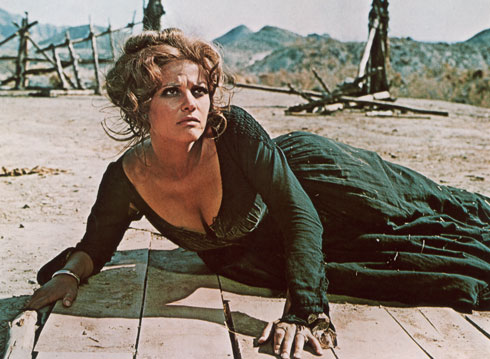
I'm a pushover for a good Western. The Western represents for me a true picture of American attitudes and values that are still relevant to American life and culture. Of course it's often from a male perspective, but once a female character is introduced, it always adds extra depth to the vision . Once Upon A Time In The West and Red River being good examples of this.

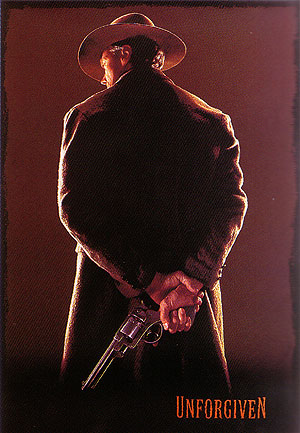
Open Range brings nothing new to this genre, in fact it owes a big debt to the Clint Eastwood western, especially Eastwood's autumn years classic Unforgiven. Despite the familiarity and casual cliche, Open Rage works due to a great script, smart pacing and terrific performance from the central cast. Robert Duvall is masterful as the wise cattle crew leader Boss, dispensing orders with gruff realism. Costner directs with a lazy efficiency (again in an Eastwood style), letting the story open up gradually. It draws you in. Tension builds, and if the shoot out at the end is overly long, its visceral impact is still effective.

What impresses here are the small details. The sense of men spending years together in open plains, living a fairly boring existence. Male bonding through little knowledge, but doing the right thing for each other is never questioned. It's an old fashioned picture of male friendship for sure,  however a sense of homoerotic knowing still sneaks in. But Costner's trump card here is the introduction of the sublime Annette Bening.
She almost spits her lines with disdain, so patronizing is her role of the unmarried middle aged nurse. You know she doesn't believe the bullshit of what her part is defined as, so she adds some modern perspective as to what she requires from her killer lover prospect (Costner's Charley Waite). Costner and Bening's romance is unbelievable in so many ways, yet you want it to happen and this adds extra tension to the story.

Open Range is a worthy late western, great storytelling compensates some of the films obvious flaws. Watching Bening here, you realize that Warren's luck has never really run out.

Astrid:
Cowboys in the Western film genre signify the outsiders. They question forming and existing social structures and their stability both internally and externally. Open Range so purely sets its drama around this outsider/insider issue that there is almost nowhere left to go from there.

Yet, I have to admit, Open Range was a thoroughly enjoyable film. And because it was not a Clint Eastwood picture, women did not need to get raped and nearly killed for the leading man (actually there were two) to get a justification for his violence. There is a simplistic grace here of not needing to go too far in depicting the cruelty of the fight.

But there is a fight. The town's rangers do not like free grazers passing through their land. Why? Because they move their heard onwards, they are always moving on for more grass, better weather, finer landscapes and so on. These cowboys remind the town that their stability and location is actually fluid and their borders are penetrable and changeable.

I have noticed that a band on tour has this same effect. We are only passing through your town, we upset the existing order by creating a small corner with our performance and our funny clothes. There is always someone who would like to come with us. There is always someone who feels aggressive towards us. And all the while the true battle is the internal one within each band member about missing a home and loving the road at the same time.

Being a cowboy is a question of degree. In my opinion, Kevin could never have Annette because she has Warren.

Thursday, November 4, 2010

Nov 1 - 6: Panama Week in Hanoi


The first Panama cultural week is being held in Hanoi from November 1 to 6 to celebrate 35 years of diplomatic relations between the two countries.

The event includes a photo exhibition titled “Discovering Panama” and the Panamanian Film Week will be held at National Library of Vietnam and Hanoi Cinematheque respectively.
During the Panamanian Film Week, “The Fists of A Nation” (Los Punos de Una Nacion, 2005, 73 min) and “Blood is Blood” (Sangre es Sangre, 2008, 25 min) will be screened on November 5 &6, 2010.
The “Panama Week” organized by the Embassy of the Republic of Panama also marks the capital’s 1,000th anniversary.


From Panama Embassy:The “Panama Week” organized by the Embassy of the Republic of Panama will take place in the first week of November to celebrate 35 years of diplomatic relations. During the “Panama Week”, the exhibition of Photography and Craft titled “Discovering Panama” and the Panamanian Film Week will be held at National Library of Vietnam and Hanoi Cinematheque respectively.
Schedule:Exhibition of Photography and Craft: Discoverying PanamaTime: 01 – 06 Nov 2010, 8 am – 8 pmNational Library of Vietnam31 Trang Thi, Hoan Kiem, Hanoi
Panamanian Documentaries Time: 05 – 06 Nov 2010
Hanoi Cinematheque 22A Hai Ba Trung, Hoan Kiem, Hanoi
During the Panamanian Film Week, “The Fists of A Nation” and “Blood is Blood” will be screened.
Film: The Fists of a Nation Screening time: 05 – 06 Nov 2010, 7.30 pm


Film: Blood is Blood Screening time: 05 – 06 Nov 2010, 9 pm


Monday, November 1, 2010

Still more on religion and the law

Another post for Halsbury's Law Exchange, published here.

In previous blogs on religion and the law, I have advocated the following classical liberal position (for which I claim no originality):

"[T]he state should adopt an entirely neutral stance towards religion, which involves permitting any form of belief or religion, but only to the extent that each is compatible with the law of the land. Thus there should be no religious exemptions to employment contracts (unless freely agreed between the contracting parties) or school uniforms (unless the school itself decides to permit it as part of its own policy on uniforms) or taxation. If a religion is undertaking charitable activities then those activities themselves should qualify for tax exemption, not the religious aspect. Nor should religious (or, equally, anti-religious) sensitivities be permitted to override freedom of speech, as in the Rushdie affair or any number of less extreme examples."

Adopting that straightforward principle would, among other things: not discriminate against any religion, not suppress any religion, give primacy to freedom of expression and the right not to be discriminated against, preclude discrimination in employment and save Byzantine arguments about how to define a religion.

Inevitably, however, a few grey areas remain. If a job is one in a religious institution then it would make little sense to preclude discrimination by the employer on religious grounds. A further problem was highlighted recently by a Christian couple who wished to become foster parents. They were open about the fact that their religious teachings shunned homosexuality. This apparently precluded them from passing the local authority's requirements since those banned any discrimination on the ground of sexual orientation. The couple plans to challenge the decision by way of judicial review in the High Court.

Here the approach I advocated above does not provide a simple answer. Assessing the suitability of people as foster parents is not like a normal job application. Presumably the authority would defend its position on grounds that homosexuality has long been legal in this country, and popular opinion has long moved away from discrimination on the ground of sexual orientation.

Yet there is a serious problem in the authority effectively becoming thought police. Discrimination on sexual grounds based on religion is hardly the only view considered obsolete or otherwise objectionable. Is there to be a spectrum of required political, social and religious views? What if, as the couple in this case appear to be, the candidates seem to be otherwise blameless good citizens? The number of views generally considered objectionable is limited only by the imagination. For example, how would the authority propose to deal with the following:

· Gay people who have openly disparaged practising Christians;

· Adherents of any particular religion who openly disparage non-believers;

· Adherents of any particular religion who openly discriminate against women in various respects;

· Representatives of any internecine ethnic, religious or territorial conflict anywhere in the world who have advocated aiding or abetting combatants,

Any of the above may be encouraging views that are unlawfully discriminatory at the least.

One point is that objectionable or controversial views of parents would not normally render parents unsuitable to the point where social services would be able to intervene and remove the children. That cannot be a complete answer, however, since the test to remove children has never been the same as the test to allow foster parenting and arguably should not be.

The answer, I suggest with a degree of diffidence, has to be that since people are entitled to freedom of worship in the private sphere, and freedom of expression generally, that there is no getting around the fact that parents of every kidney, be they natural, adoptive or foster, are bound to expose children to views which the majority would find unsavoury to say the least. The children will however have to be educated at a state-approved school and via that method at least ought to be made aware of discrimination and the law. Whilst there would be some cases where a parent’s views would be so harmful so as to justify precluding them from fostering children, there has to be a fairly wide mesh.

One parting shot though – the classical liberal view I have been arguing for may well preclude religious schools, on the ground that the state is responsible for education at a primary and tertiary level and is required under the liberal approach to be neutral towards religion. This would be a dramatic change for the United Kingdom, but I would suggest that observers of the Northern Irish troubles for a start would see some empirical justification. But that is an issue for a separate post – indeed many posts.

Post Script: The following comment by one SJH and my response appear below the article on HLE:

SJH:
Nov 1st, 2010 :

While this does not appear to be an attack on Christianity, the local authority is implying that one viewpoint is correct and the other is wrong, ie Christian views are outdated and must be abandoned. Homosexuality must be accepted by all. To not accept it is prejudice. Let’s say for a moment that the state decided to take the other view: Christianity is correct and homosexuality is wrong – therefore, we shall not allow gay couples to adopt or foster children. Would people also be expected to accept this? The UK is now multi-cultural and we are constantly told to accept a ‘diverse Britain’ – that’s all fine but what does this mean? Will some people have to give up their own opinions and beliefs to make way for new ones coming through? While it’s important that society grows and develops, why must a person be forced to adopt a view or live a way which goes against their beliefs? As for the children – they will grow, change and will be able to form their own opinions. Or maybe by the time these children grow up society will have a whole new set of ‘guidelines’ for us which will discriminate against a whole new set of people, while they desperately attempt to be ‘politically correct’. Discrimination laws are changing and will start to clash – the question is: who will be deciding what is essentially right and what is wrong?

My Response:

The point I was making was that assessing parents for fostering children isn’t really akin to an employment application. In an employment situation, as long as one does what one is contracted to, then one’s private life is no-one’s concern, unless they do something in public outside of the workplace that brings the employer into disrepute.

With potential foster parents, a rather more searching and personal assessment would be appropriate. But does this extend to their political and religious views? Without ruling it out completely (suppose the prospective parents spent their time exercising their right to freedom of expression by calling for ethnic cleansing of some form or another and attempting to form a modern vision of the long defunct British Fascisti), surely the permissible spectrum of views has to be wide indeed. There are any number of reasons for this, including that what the authority thinks is politically correct is likely to change over time, as you point out, and the fact that, like it or not, most people have any number of likes and dislikes, rational and irrational, that might irk some local authority functionary but does not render them unsuitable parents. The children, as you say, will gain their own views over time anyway.

Which brings one to the central question in this particular issue – the needs of the child, which (correctly) in law is the overriding question. In assessing whether it is in the interests of the child to be fostered by any particular household, the parents’ religious and political views are but one factor, and surely absent something fairly extreme not a decisive factor either. Except of course everyone agrees on fairness until it comes to defining it, and similiarly we can all agree on a wide spectrum of views until something is offered as being outside it.

James Wilson Nov 2nd, 2010 :

Panama and Taiwan start talks for signing of Double Taxation Agreement

Photo: With this meeting the Panamanian delegation, lead by the president, Ricardo Martinelli concludes its Asian tour. Photo / Courtesy of the Presidency

During a meeting with Panamanian businessmen and Taiwan, the president, Ricardo Martinelli, announced that the two countries begin talks on signing an double taxation agreement.

"Panama respects foreign investment and we are open to receive new investments," said Martinelli to Taiwanese businessmen who mentioned that with the signing of the Free Trade Agreement, Taiwan companies have invested heavily in developing the service transportation, technology, among others.

On another topic, Martinelli presented to entrepreneurs in Taiwan's competitive advantages offered by the country to foreign investment.

"In Panama they have opportunities to invest in agriculture, real estate, among other areas, where already several companies that have entered this Asian country," he said.

For its part, Taiwan's deputy foreign minister, Thomas Hou Ping-fu noted that Panama is Taiwan's staunchest ally in Central America that have maintained diplomatic relations for more than a century and that these bilateral ties have increased after the entry into force the Free Trade Agreement between both countries, as Taiwanese investments in Panama have increased by over 215 million Dollars.

More on Taiwan-Panama business
http://aprochipa.blogspot.com/search/label/negocios

.

Happy Hallowe'en!

I made a costume for my son when he was about 4 and obsessed with everything to do with dinosaurs.  I had a book called Sew a Dinosaur - 21 playful prehistoric beasts to follow you home, which included a pattern for a kid-sized Triceratops costume.

The problem is, my son REALLY wanted to be a Tyrannosaurus Rex. They look nothing whatsoever like Triceratops.

Somehow or other, I did it.

 
Details:  The head pieces were cut from cheap alligator-print knit over 1" foam backed with lining (bloody red for the inside of the head).  The teeth and claws were more of the foam.  I had to bone the head to keep the jaws out front, and to prevent the top one collapsing.  Even so it wasn't the easiest costume for him to see out of.

The body is made without the foam.  The tail was a cone of the alligator print sewn over foam.  The base of the tail is circular, sewn to the back of the shirt.  To keep the tail from dragging, I attached an elastic belt to the SAs on the inside, and it fit snugly around my son's hips.  The tail stayed straight out and wiggled as he walked.

It was extremely cute, if I say so myself, and it was worn many times by many kids.